Right now, as you read this, some of the biggest companies in the world are opening their books. Executives are sitting in front of cameras and microphones, walking analysts through revenue numbers, profit margins, and, most importantly, what they expect to happen next quarter.
This is earnings season. And for the first time, you're watching it with enough knowledge to understand what you're seeing.
What Earnings Season Actually Is
Earnings season is the period when publicly listed companies release their quarterly financial results and forward-looking guidance. These reports give investors insight into revenue, profit, and overall business performance and they often act as a key driver of short-term market movement.
It happens four times a year. It typically begins two weeks after the end of each quarter, in the middle of January, April, July, and October, and lasts approximately six weeks. That means the Q1 2026 earnings season - covering January through March results - is happening right now, running through late May.
The order is predictable. Earnings season traditionally opens with Wall Street's big banks, led by names like JPMorgan, Goldman Sachs, Wells Fargo, and BlackRock. Technology and big tech follow in the final weeks of April. By the time May arrives, the picture of how corporate America performed in Q1 is largely complete.
What the Numbers Actually Mean
Three figures appear in almost every earnings report. As a beginner, these are the ones worth knowing:
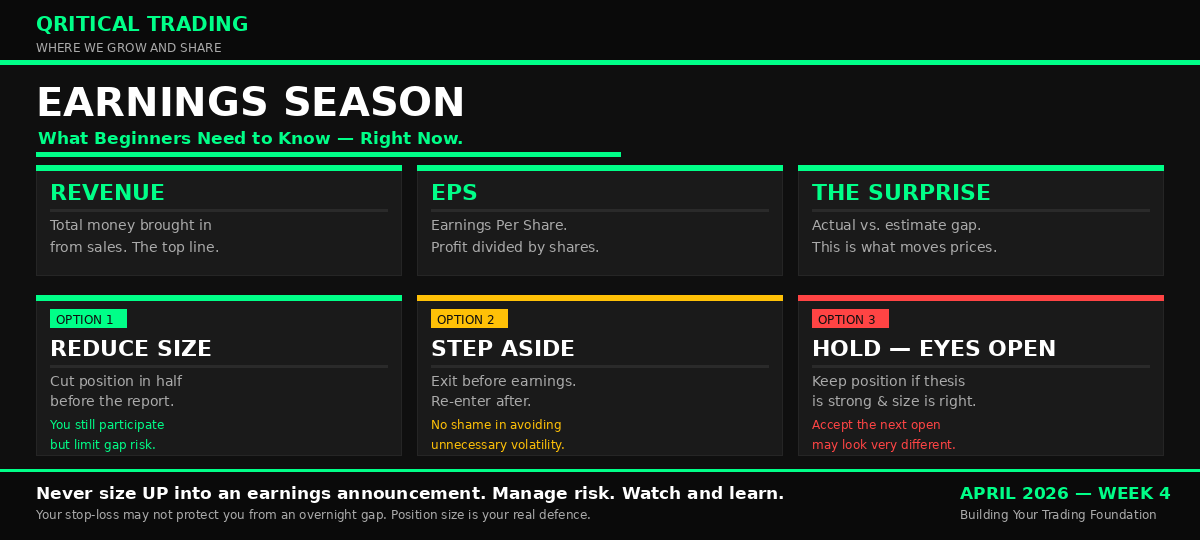
- Revenue: the total money a company brought in from sales during the quarter. Think of it as the top line: how much came through the door before any expenses.
- Net Income: what's left after all the expenses are paid. Revenue minus costs equals net income. A company can have strong revenue but weak net income if costs are climbing faster than sales.
- Earnings Per Share (EPS): net income divided by the number of shares outstanding. EPS is the standard metric traders use to measure company profitability per share — and the gap between actual EPS and analyst estimates directly drives stock price reactions after results.
That last point is critical and counterintuitive for beginners. A company can report growing profits and still fall in price. A company can report a loss and still rise. Why? Because what matters for traders is not just whether a company grew. It's less about raw numbers and more about the gap between what analysts predicted and what companies actually reported. That gap is what moves stock prices.
A Real Example From This Season
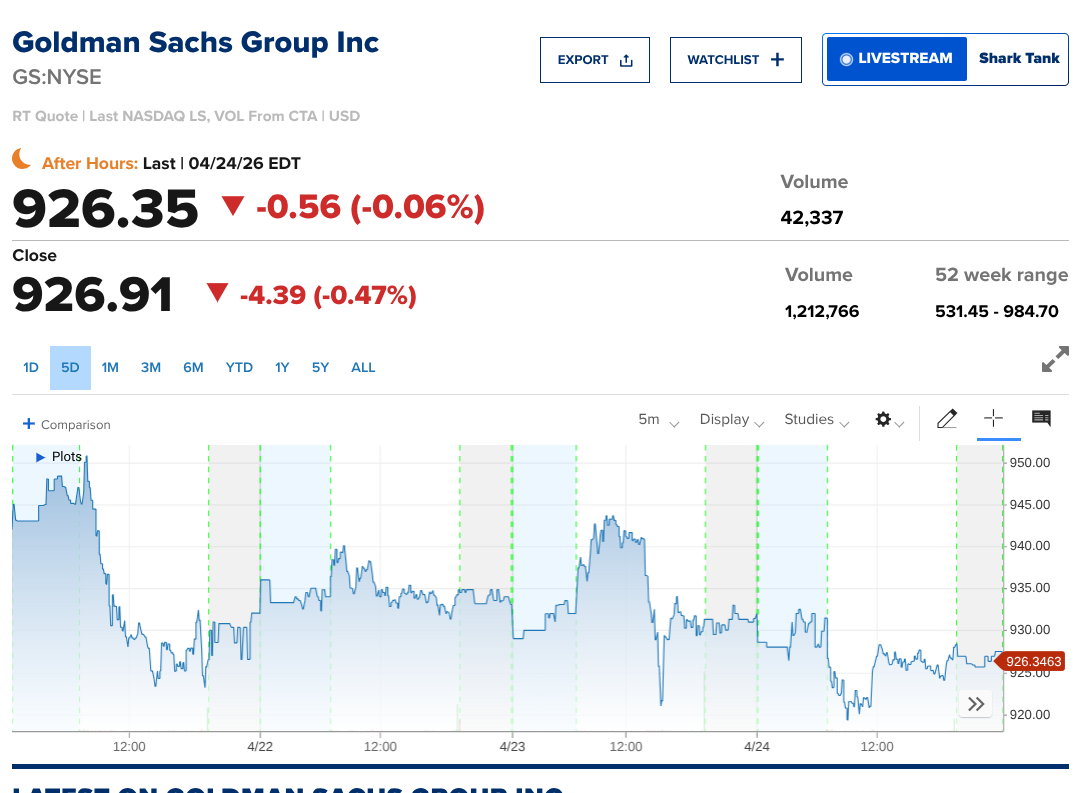
You don't have to look far for proof. Goldman Sachs opened the Q1 2026 season on April 13th with earnings per share of $17.55 against a consensus estimate of $16.47, on revenue of $17.23 billion. Equities trading revenue reached $5.33 billion (a record for the firm) and investment banking fees surged 48% year-over-year. By headline metrics, the quarter was strong. Yet the stock fell on the day. Read that again. Record revenue. Record trading. Strong beat on estimates. Stock went down. The beat mattered less than the guidance and the macro context it arrived in. Investors weren't just reacting to what happened in Q1; they were reacting to what management said about Q2 and beyond. That's the earnings season lesson that takes most beginners by surprise.
Why Beginners Should Often Sit Out Earnings Plays
Here's the honest advice: in your first year, earnings announcements on stocks you hold are something to manage, not something to gamble on. Earnings season is marked by increased market volatility, with individual stock prices often fluctuating significantly in response to releases, especially for growing companies. That volatility cuts both ways. A stock can gap up 15% overnight on a strong report. It can also gap down 20% on guidance that disappointed, even if the actual numbers looked fine. The word "gap" matters here. Companies can report results when markets aren't even open, which can cause their stocks to gap making a sharp move up or down with no trading occurring in between. That means your stop-loss, the one you carefully placed using everything from March, may not execute at your price. The stock simply opens past it.
This is not a reason to panic. It's a reason to be aware.
What To Do Instead
For stocks you're already holding going into an earnings announcement, you have three reasonable options:
-
Reduce your position size before the report. If you're holding 100 shares, consider cutting to 50 before earnings. You still participate in any upside, but your exposure to a gap-down is cut in half. Many market participants reduce position size during earnings season to account for larger potential moves, smaller positions help limit damage from unexpected outcomes.
-
Exit before the report and re-enter after. There's no shame in stepping aside. If you don't have a strong conviction about the outcome, and most beginners shouldn't, taking your profit or cutting your loss before the announcement is a legitimate strategy.
-
Hold with eyes open. If you believe in the company's long-term thesis and the position is already sized correctly within your March guidelines, you can hold through earnings. Just accept that the next morning's price might be significantly different from where you left it.
What you should not do is size up into an earnings announcement hoping for a big move. Earnings calls often reveal more through tone and strategy than the press release. That kind of nuance is hard to trade around when you're still learning to read the room.
Your Earnings Season Action Step
Pick two or three companies you've been watching in your simulator. Look up their earnings dates. Most brokerages and financial sites have a free earnings calendar. Then before each report, ask yourself:
-
What is the market expecting? (Look up the consensus EPS estimate)
-
What does the company need to say about next quarter to move the stock higher?
-
How would I manage my position if the stock gapped down 15% overnight?
You don't need to trade around earnings to learn from them. Just watching and asking those questions will teach you more about how markets actually work than almost anything else you can do this month. Earnings season is more than just a financial event; it's an opportunity to advance as a trader, hone and refine your skills, and learn how to manage risk more effectively in a dynamic market environment.
Watch it. Learn from it. And keep your position sizes where March taught you to keep them.
References


Responses