
You did something most beginners never do. Over the past four weeks, you built a complete risk management system from scratch. Not pieces of one. Not a half-finished framework you read about once and forgot. A full, working system, the same foundation that professional traders spend years assembling through expensive trial and error. Before we move into April, it’s worth pausing to understand what you actually built. Because the four topics from March weren’t four separate lessons. They were four layers of a single structure, and that structure is now yours.
Layer 1: The 1% Rule - You Set Your Limit
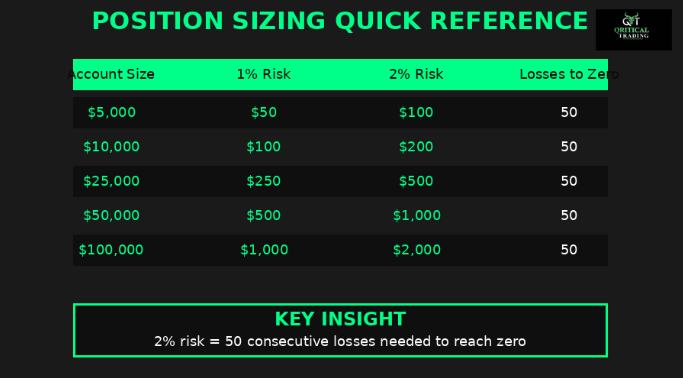
In Week 1, you learned the foundational principle that separates disciplined traders from gamblers: never risk more than 1-2% of your account on a single trade. It sounds simple. It is not easy.
This single rule, risking only 1-2% of your capital per trade, is what separates professionals from gamblers. You also learned why the math works in your favour: with a 2% risk cap, you would need to lose 50 consecutive trades before reaching zero. That kind of protection doesn’t come from skill alone. It comes from a rule you set before emotions enter the picture. If you haven’t already, write that number down. Tape it somewhere visible. Your maximum risk per trade is not a suggestion; it is the first wall in your fortress.
Layer 2: Position Sizing — You Made It Mathematical
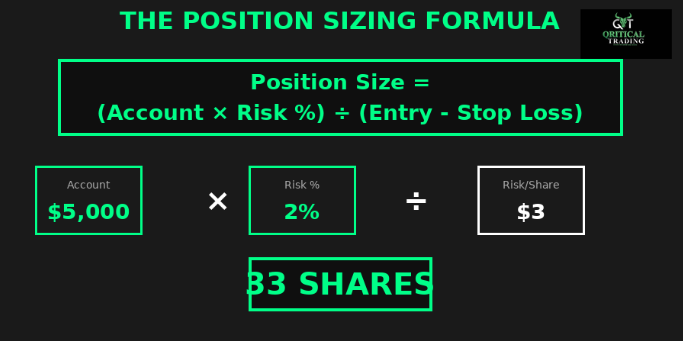
Week 2 took the 1% rule and gave it teeth. You learned the formula that converts a percentage on paper into an actual number of shares:
Position Size = (Account × Risk%) ÷ (Entry Price − Stop-Loss Price)
This formula matters because, as TraderLion (2025) notes, one of the most common and costly beginner mistakes is sizing positions based on round numbers or gut feel rather than calculated risk. The formula removes both. With a $5,000 account, 2% risk, entry at $75 and stop at $72, you’re buying 33 shares. Not 30 because it’s a round number. Not 50 because you feel good about the trade. Thirty-three, because the math says so. Consistency doesn’t come from complexity, it comes from clarity. Your position sizing formula is clarity in action.
Layer 3: Advanced Sizing — You Learned to Adjust
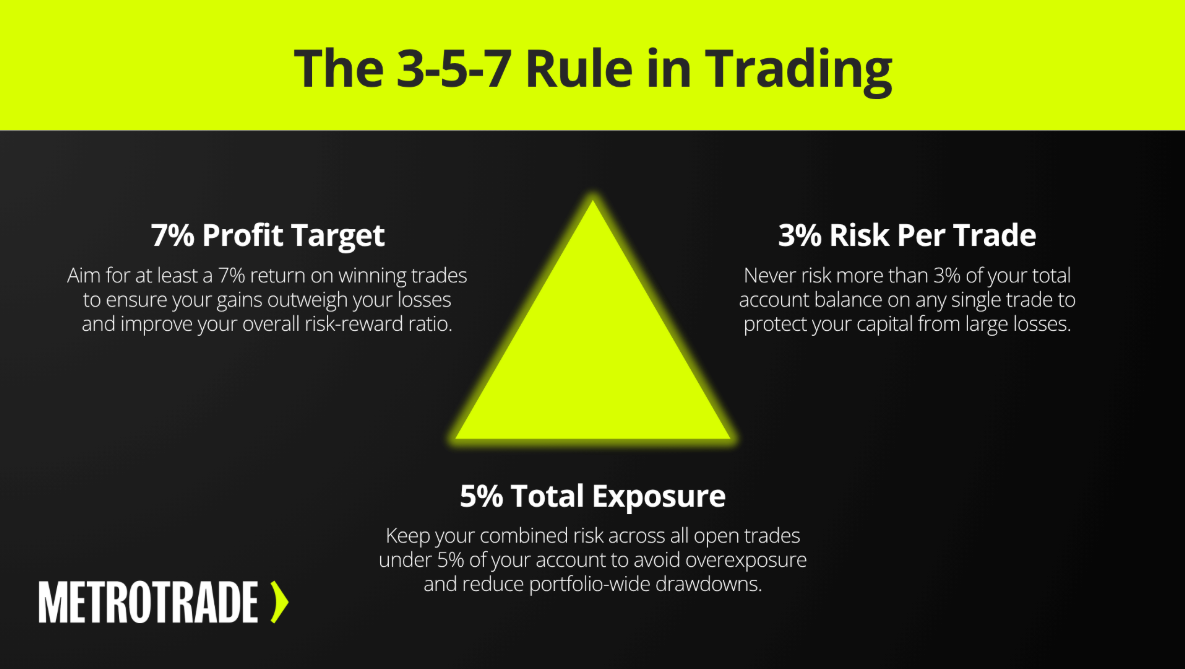
Week 3 showed you that the formula from Week 2 is a starting point, not a ceiling. Markets aren’t uniform. A volatile stock in a volatile week demands a different approach than a stable blue-chip in a quiet market.
You learned to adjust your sizing using ATR (Average True Range), a measure of how much a stock typically moves in a day. You learned maximum position limits: no more than 20-25% of your account in a single stock, no more than 30-40% in one sector. And you saw why those limits exist: markets have become more correlated, assets that once moved independently now tend to fall or rise in sync during stress events. Sector concentration isn’t just uncomfortable. In volatile conditions, it can be account-ending. The advanced sizing tools aren’t about complexity. They’re about making sure your Week 2 formula holds up when the market stops behaving itself.
Layer 4: Trading Psychology - You Met Your Biggest Opponent
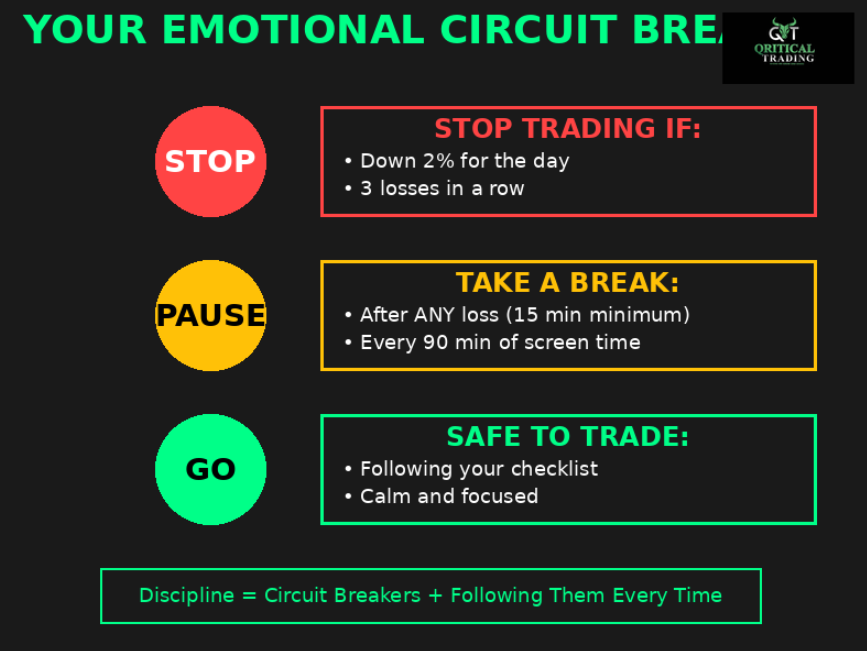
Week 4 introduced the layer that most trading education skips entirely. You can know the 1% rule. You can calculate position sizes in your sleep. And you can still blow up your account, because fear, greed, and FOMO don’t care about your spreadsheet.
Emotion control matters because fear and greed drive 90% of retail trading errors. You learned to name those emotions before they make your decisions for you. You learned about circuit breakers, the 2% daily loss limit, the mandatory 15-minute break after a losing trade, the 3-strike rule. And you learned the most important reframe in trading psychology: your trading plan isn’t a set of restrictions. It’s an emotional fortress. Studies show that written goals are 42% more likely to be achieved and the same logic applies to written trading rules. If your plan lives only in your head, it won’t survive your first bad week.
The Five Questions
Here is your self-assessment for March. Answer these without looking anything up. If you can answer all five confidently, you have genuinely absorbed the foundation. If one or two trips you up: that’s your homework for April.
1. What is the maximum percentage of your account you will risk on a single trade?
2. If your account is $5,000, your entry is $80, and your stop-loss is $77, how many shares can you buy at 2% risk?
3. Why would you reduce your position size on a more volatile stock?
4. Name one reason you should never move your stop-loss further away from your entry after a trade goes against you.
5. What is your circuit breaker - the rule that forces you to stop trading for the day?
If question two took you more than 30 seconds, revisit the Week 2 formula. If question five drew a blank, write your circuit breaker down today. Right now, before you read another word.
What April Looks Like
March was about building the structure. April is about learning to use it in a real, moving market.
Over the next four weeks you will see your March foundation applied to actual market conditions, seasonal patterns, earnings season, and the practical tools that bridge theory and real trading. The traders who make it don’t rush. They treat their first year as paid education, not income generation. That is exactly the approach this newsletter is designed to support.
The Foundation Tracker included in the newsletter is your reference page for the months ahead. Pin it, screenshot it, print it. Every article from here until July will connect back to those four layers. When you understand why it keeps coming back to the same foundation, you understand trading.
July is three months away. You’re more ready than you think.
References




Responses